Advertising agencies and AI: what changes in production

Nine out of ten advertising agencies in the United States already use generative AI, according to Forrester and the 4A’s in June 2026. Most apply it to productivity rather than to the idea. The change shows in production: more versions, more formats and scenes that could not be filmed before.
How much agencies use generative AI in 2026
The most cited figure of the year comes from the United States. In June 2026, Forrester and the 4A’s, that country's association of agencies, reported that nine out of ten marketing agencies use generative AI and that half already use AI agents to carry out marketing tasks, according to Forrester's press release. The survey covered around 200 agency executives, according to MediaPost's coverage.
On the advertisers' side, the World Federation of Advertisers (WFA) reported in September 2026 that 96% of major brands use generative AI or AI agents in their marketing, according to its research published that month. AI is already on both sides of the table.
We did not find a recent, equivalent survey for agencies in Latin America. Our reading is that these figures point in a direction that can also be seen in the region, with its own timelines and budgets.
What agencies use AI for: productivity before ideas
The same study shows where the focus is. According to Forrester and MediaPost, 81% of agencies use generative AI to improve their teams' productivity and 65% to improve the quality of creative ideation. 61% still treat AI as an operating cost and only 6% sell it to their clients as a line of business. Forrester headlined its press release with a warning: agencies are using AI to cut costs at the expense of creativity.
For a brand, the consequence is concrete. Using AI to do the usual things faster improves the agency's margin, but it does not change what the audience sees. What shows on screen is when AI expands what an idea can show.
What brands ask their agencies about AI
The WFA research from September 2026 shows a tension. 69% of major brands require their agencies to disclose when they use AI and 59% have already included AI clauses in their contracts, covering issues such as intellectual property, confidentiality and training data. But only 13% say they have a lot of visibility into how their agencies use AI.
That adds questions that did not used to come up in a briefing meeting: which tools are involved and what brand material is used in each piece. And on the publishing side, platforms also require realistic AI-made content to be disclosed, as we explain in the AI label on social media.
Where an agency's production changes with AI
The most visible changes are in production, more than in strategy. There are four fronts where it shows.
Previsualization. An idea can be shown in image and motion before it is approved, instead of being defended only with text and references.
Scenes that could not be filmed. Scales, weather, crowds or places that required a disproportionate shoot become creative options again.
Versions and formats. Vertical, horizontal, short lengths and adaptations by market are planned from the start.
Social media timing. Responding to a conversation while it is still current no longer depends on a shoot date.
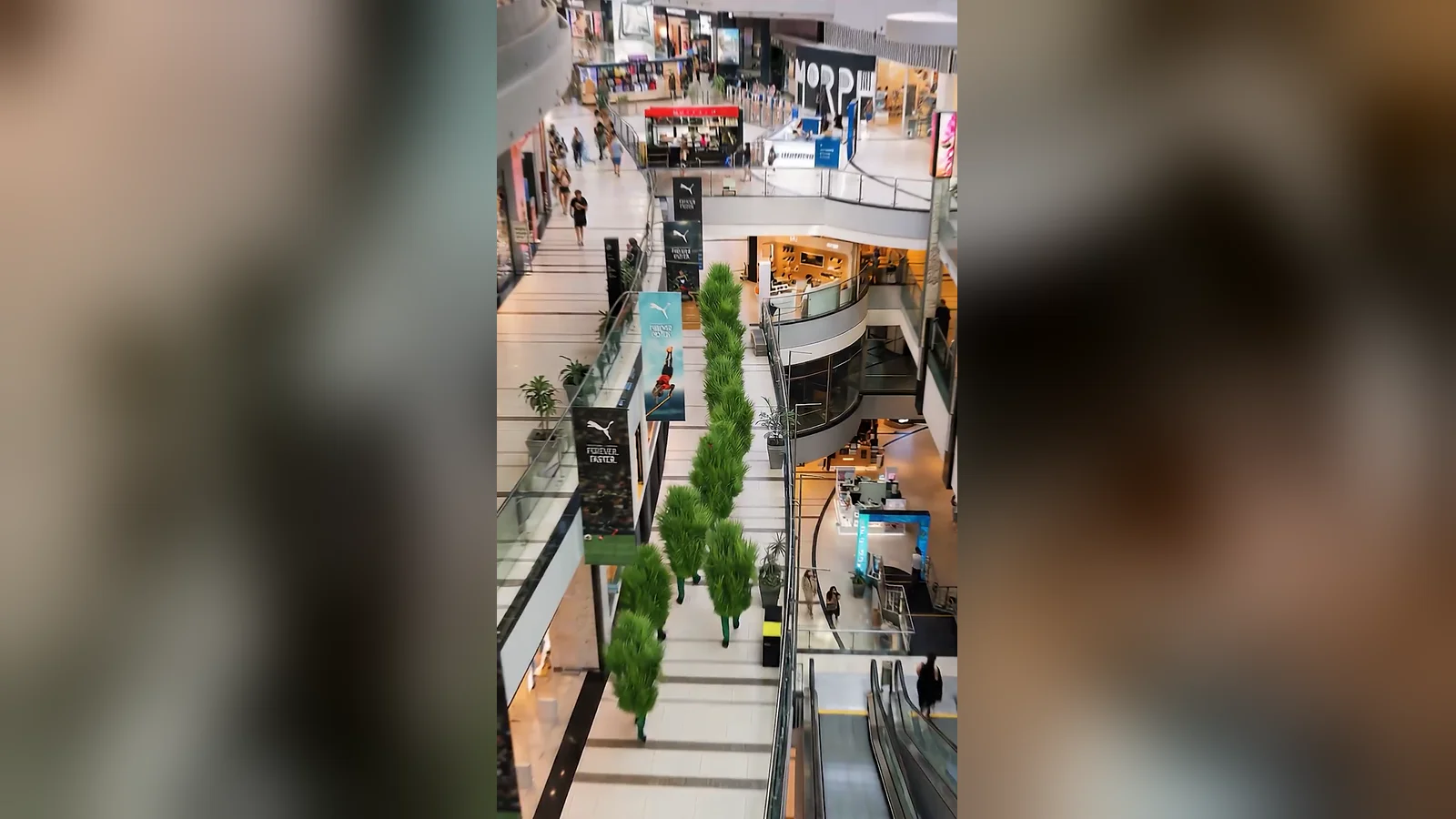
A published example: to present its Formula 1 simulators, Alto Palermo turned the shopping center into a night circuit, with race cars integrated into a real setting through AI, compositing, animation and VFX. The idea was designed together with the way of producing it, which is why it could propose a scene that was never going to be filmed.
What stays the same in an agency that works with AI
AI does not decide what to say. The idea, the brand's tone, the choice among many variants and the finishing are still direction work. Kantar puts it this way in its marketing trends for 2026: AI does not replace branding, it redefines it.
When generating options takes little effort, choosing well matters more. We develop this in generative AI and creative direction.
Where an AI production partner comes in
Not every agency is going to build every AI production capability in-house. Adding a partner makes sense when volume goes up for a few weeks, when the piece calls for specialization in VFX, motion or screens, or when the deadline is part of the creative problem.
The timing matters as much as the partner. If production comes in at the start, it can propose what is generated, what is filmed and how the campaign will scale. If it comes in at the end, it only executes something that is already closed. Why that distance is shrinking is in creative work and production, ever closer, and how to add capacity without losing the idea between teams, in agencies and AI production. To choose who to work with, the eight questions for choosing an AI production studio are useful.
Frequently asked questions
How many advertising agencies use artificial intelligence?
In the United States, nine out of ten marketing agencies use generative AI and half use AI agents, according to the study by Forrester and the 4A’s published in June 2026. On the advertisers' side, the WFA reported in September 2026 that 96% of major brands use generative AI or agents. We did not find an equivalent recent figure for agencies in Latin America alone.
Does AI replace advertising agencies?
The 2026 data shows that agencies have adopted AI and use it mainly to gain productivity. What is shifting is where the value lies. Producing variants and scenes has become faster, and that is why the idea, the creative direction and the brand judgment to choose matter more. Brands, in addition, are asking for more transparency about when and how their agencies use AI.
What do brands ask their agencies about the use of AI?
According to the WFA, in September 2026 69% of major brands required their agencies to disclose when they use AI and 59% had included AI clauses in contracts, covering issues such as intellectual property, confidentiality and training data. Only 13% say they have a lot of visibility into that use, so transparency has become part of the relationship between brand and agency.
When should an agency add an AI production partner?
When volume goes up for a period, when the piece calls for specialization in VFX, motion or screens, or when the deadline is part of the creative problem. It pays off more if the partner comes in at the start, while it can still propose what is generated, what is filmed and how the campaign scales, and not only at the end to execute something that is already closed.
If you are thinking about a campaign with your agency, take a look at the published projects or write to us through the contact form.