From brief to final cut: how to structure an AI production
An AI video is made in six stages: defining the problem, finding the idea, building the visual language, choosing the production mix, finishing the piece and preparing the adaptations. AI speeds up the execution of several of them, but the order of the decisions is what keeps speed from turning into tests without direction.
The speed of generation can give the impression that an AI production goes straight from an idea to a finished video. In reality, the faster you can produce, the more important it becomes to put the decisions in order.
1. Define the problem before choosing the technique
The starting point is the objective: what the brand needs to communicate, to whom, in what context and what should happen after people see the piece. The format, the length and the channel also shape the creative work from the start.
2. Find an idea that can hold up
The concept organizes the production. It defines what happens, how the piece progresses, when the brand appears and what the audience should remember. A good idea also helps decide what not to produce.
3. Build the visual language
References, camera, light, color, art, product, characters and level of realism turn the concept into a system. This stage is especially important with AI because it keeps each generation from opening a new visual direction.
4. Choose the production mix
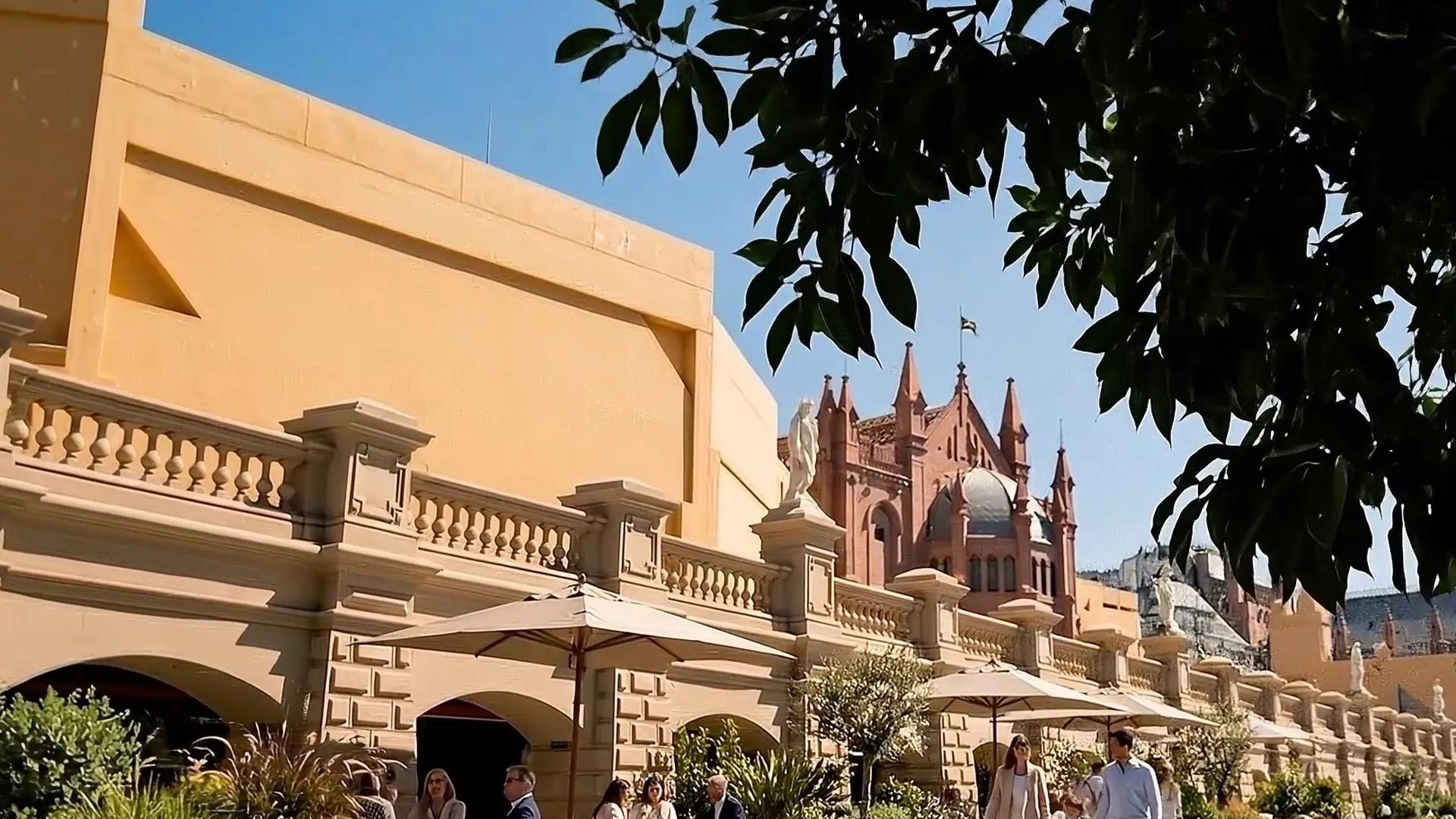
The execution can combine AI, filming, existing material, CGI, animation, VFX, motion graphics or design. The goal is not to keep technical purity, but to find the combination that resolves the piece most effectively. At OH! Buenos Aires, for example, the starting point was architectural renders and real construction footage: there was nothing to film. Which parts are worth generating and which are not is reviewed in what can be done with AI in video.
5. Finish, not just generate
Editing, sound, music, color, compositing, typography and brand review are part of the result. Several good shots do not, on their own, make a good video.
6. Think about the adaptations before the master
Vertical, horizontal, square, special screens and short versions should be considered from the initial composition. Designing for a single format and cropping afterwards usually lowers quality and legibility. We develop this in One campaign, many screens.
What AI changes in this process
The stages are the same as in any production. What changes is that several of them can coexist: things are visualized earlier, alternatives are tested more quickly and errors appear while they are still easy to fix. The full picture is in AI video production for brands, and if you are about to choose who to make it with, in how to choose an AI video production company.
A more agile process works when each stage reduces uncertainty and brings the idea closer to a clear delivery.
Frequently asked questions
How is an AI video made?
In six stages: defining the problem, finding an idea that holds up, building the visual language, choosing the production mix, finishing the piece with editing, sound and brand review, and preparing the adaptations for each format. AI speeds up the execution; the team sets the order of the decisions.
At which stage does AI come in?
Mainly in the execution: visualizing, generating scenes, extending backgrounds and preparing versions. Before that there are decisions that do not depend on a tool, such as the objective, the idea and the visual language, and afterwards there is a finishing stage that does not generate itself either.
What does a brand need to start an AI video?
A clear objective, who it is speaking to, where the piece will be seen, in which formats and for what date. If there is brand material, such as renders, photos, products or previous pieces, it is worth having it at hand from the brief.
This is how we work on campaigns and commercials at FeedGuru.


