Audiovisual production with AI: what is really changing

AI video production for brands combines generation with artificial intelligence, filming, CGI, VFX, motion graphics and post-production within a single process. What changes is how the work is organized: idea, visualization, production and adaptations coexist and correct each other much faster. What does not change is that someone has to direct.
For brands, that opens up creative possibilities, but it also makes judgment more important. This article goes through the stages of an AI production and links, in each one, to the article where we develop it in detail.
From a linear process to a more integrated one
In a traditional production, many decisions move forward in stages: first an idea is approved, then it is produced and finally it is adapted. With AI, some of those stages can coexist. It is possible to visualize earlier, test alternatives more quickly and catch errors in time, while they are still easy to fix.
The process still exists, but the distance between thinking and producing gets shorter. How that sequence is organized is covered in From brief to final video: how to organize an AI production.
Stage 1: the idea is decided before opening a tool
An AI production starts with the objective, the audience and the story. Only then are the resources chosen. If the order is reversed, the team ends up choosing among whatever came out instead of deciding what had to come out. The step by step is in thinking about the idea before the prompt.
With generative AI, exploring options is easy and choosing is the hard part. That is why creative direction with generative AI works as a system of rules. Without those rules, what is now called AI slop appears: correct pieces that could belong to any brand.
Stage 2: choosing the technique for each shot
Large-scale scenes, transformations, characters, visual worlds, product variations and special formats can be explored with a more flexible structure. AI can also be integrated with filming, CGI, VFX, motion graphics, design and existing material. That is how we handled, for example, SÃO's arrival at the Abasto: a helicopter, a cargo and a shower of croissants over the city.
The question is no longer whether a piece is "made with AI". What matters is which combination of techniques tells the idea most effectively. How this is decided shot by shot is explained in Shoot, AI or both; which scenes are worth generating and which are not yet, in what can be done with AI in video; and how cinematic scale is handled, in VFX with AI for brands.
Stage 3: keeping product, characters and brand consistent between scenes
An isolated image can be excellent and still fail within a campaign. Product, characters, spaces and tone have to hold between shots and between pieces. That is defined before generating, as we explain in visual consistency with AI, and it weighs even more when the brand has its own protagonist: we develop it in brand characters with AI.
This stage also includes the brand review: identity, context, claims and any element that represents the brand. Third-party images, voices and elements go through that same review.
Stage 4: finishing the piece and designing each format
Editing, sound, music, color, compositing, typography and post-production turn diverse materials into a finished, coherent piece. Several good shots do not, on their own, make a good video.
Then the piece has to live where it will be seen. A vertical video for social media calls for a different rhythm than a large-format LED screen in a shopping center. We cover this in reels for brands and in content for LED screens.
How long it takes and why speed changes the calendar
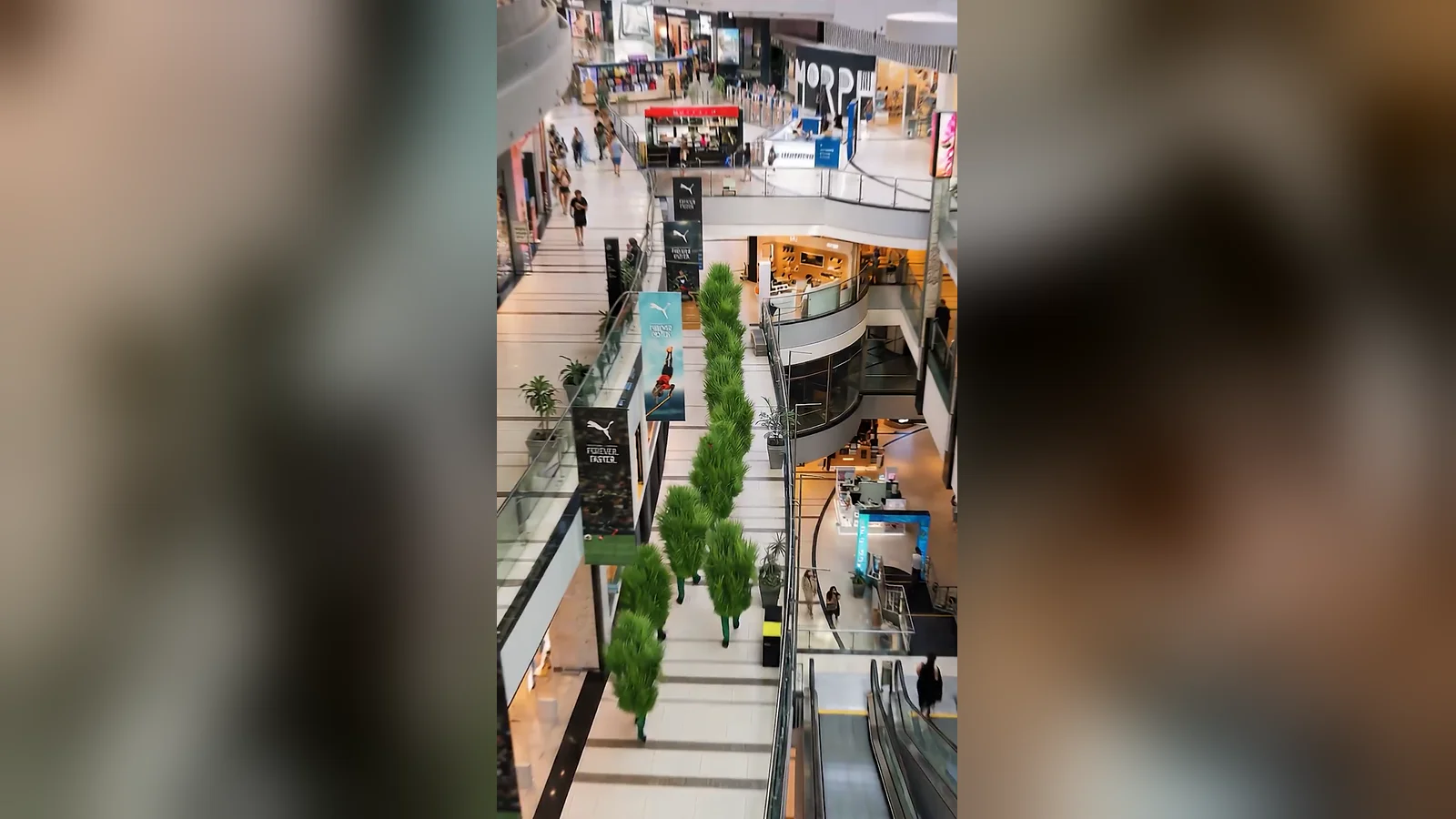
When producing an audiovisual piece requires fewer steps and fewer dependencies, a brand can respond better to launches, retail dates and cultural conversations. In Días de lluvia, for Alto Palermo, the project went from brief to campaign launch in 12 days, because creative work and production worked within the same process from the start.
Actual timelines depend on the idea, the approvals, the brand material available and the number of versions. When the window is a matter of hours, the challenge is different: arriving with something of your own, which is the topic of real-time marketing.
Which pieces are produced with AI
The same logic applies to very different pieces, each with its own rules:
Spots and campaigns: how a brand spot is produced today is covered in AI commercials, and what we have already learned in the region, in AI advertising in Latin America.
Shopping centers and retail: retail dates, openings, events and the center's own screens, in video for shopping centers.
Companies and institutions: how to tell the story of a company, a trade association or a project, in corporate video with AI.
Agencies: how to add production capacity without losing the idea between teams, in production company for agencies.
Quality is not automated
Strategy: defining which communication problem is being solved.
Creative direction: choosing an idea and building a language of its own.
Consistency: keeping product, characters, spaces and tone consistent between scenes.
Post-production: turning diverse materials into a finished, coherent piece.
Brand safety: reviewing identity, context, claims, rights and any element that represents the brand.
If you are evaluating who to produce with, we put together eight questions for choosing an AI video production company.
Technology stops being the advantage
The opportunity goes beyond producing faster: it makes it possible to think more freely, try more paths, reach more formats and shorten the path between the idea and the delivery. As the tools become accessible, technology stops being an advantage in itself.
AI expands what a production can do. The value still lies in knowing what is worth doing and how to bring it to a brand standard.
Frequently asked questions
What is AI video production?
It is the production of audiovisual pieces in which part of the images, backgrounds, characters or adaptations are created with artificial intelligence, combined with filming, CGI, VFX, motion graphics, design and post-production. The idea, the creative direction and the brand review are still decisions made by a team.
Does an AI video replace a shoot?
It is not always the right choice. Some scenes are handled better by filming and others, such as an impossible scale or a place that does not exist yet, are where AI opens up something that was not feasible before. The usual approach is to combine techniques according to what each shot calls for.
How long does an AI video for a brand take?
It depends on the complexity of the idea, the number of formats, the brand material available and the approval stages. In Días de lluvia, for Alto Palermo, the project went from brief to campaign launch in 12 days, because creative work and production worked within the same process from the start.
What should a brand review before publishing a video made with AI?
Identity, product, context, claims, image rights and any third-party element that appears on screen. That review needs someone responsible and clear criteria, also when the piece goes out in a few days or on the same day.
This is how we work on campaigns and commercials at FeedGuru.