AI commercials: how a brand spot is produced today

An AI commercial is a brand spot in which part of the images, the sound or the post-production is generated with artificial intelligence. It starts from an idea, a script and human creative direction, it runs in the same media as any commercial and it is approved the same way: what changes is the path to each shot.
For a brand, the useful question is what changes in a spot when part of it is generated and what stays the same. Below it goes stage by stage, with a published case as an example. The overall picture of working with AI in video is in the guide to AI video production for brands.
What an AI commercial is
An AI commercial does the same job as any spot: it presents a brand, a product or a campaign in a few seconds, with a clear message and a brand ending. It runs in the same places: social media, television, screens, digital out-of-home. What changes is where the images come from.
In a traditional production, each shot needs a location, a cast, a technical crew and a shooting day. In an AI commercial, some of those shots are generated: an exterior in the rain, a scene that cannot be filmed, a character that does not exist, an impossible scale. Others are filmed or come from material the brand already has. The most common approach is to combine both.
That is why it is worth treating it as a way of producing a spot, with its own working rules. The audience sees a commercial. If they are left thinking about the tool, something went wrong.
Why an AI commercial starts with the script
The first deliverable of an AI commercial is an approved script. Before generating a single image, the idea, the tone, the length and what the piece has to achieve for the brand need to be clear. Without that, generation produces a lot of material and no direction.
The order is the same as for any spot: brief, idea, script, storyboard and only then production. The difference is that the idea can be thought out knowing what AI production makes possible. A scene with a crowd, a giant object over the city or a specific weather condition is no longer ruled out for logistical reasons and becomes a creative decision again.
Why the idea comes before the tool is covered in thinking about the idea before the prompt. If a conversation about a commercial starts with the software, a stage is missing.
What is generated, what is filmed and what is resolved in post-production
Every shot in an AI commercial has a source, and deciding it is part of the direction. There are three possible sources and they are almost always combined.
What is generated: scenes that cannot be filmed or that would require a production out of proportion to the piece. Exteriors with weather, impossible scales, characters, settings that do not exist yet.
What is filmed or already exists: the real product, the storefront, people who have to be those specific people, the brand's archive footage. When something has to look exactly as it is, it is better for it to be real.
What is finished in post-production: compositing, color, typography, motion graphics, sound and mastering. It is the stage that brings everything together and the one that decides whether the piece looks finished.
The criterion comes from the idea: you choose what tells it most clearly and what the brand needs to control. We go through that decision, shot by shot, in when a shoot, AI or a combination of both makes sense.
How the 30, 15 and 6 second versions are planned
A commercial almost never runs in a single length. A campaign usually needs a main spot, a short version for social media and a minimal piece for formats of a few seconds, plus vertical and horizontal cuts. When the versions only appear at the end, they end up being trims of the long spot.
In practice that means writing the script in blocks that work on their own, planning shots that can carry the message in six seconds and producing the framing with the vertical format in mind too. With AI, generating a variant of a shot for another format is quicker than on a shoot, but it still needs direction: the vertical framing of a scene is composed again.
A useful rule: the brand ending has to work in every length. If the brand only appears in the last second of the long spot, the short version arrives unsigned.
The Días de lluvia case: from brief to campaign in 12 days
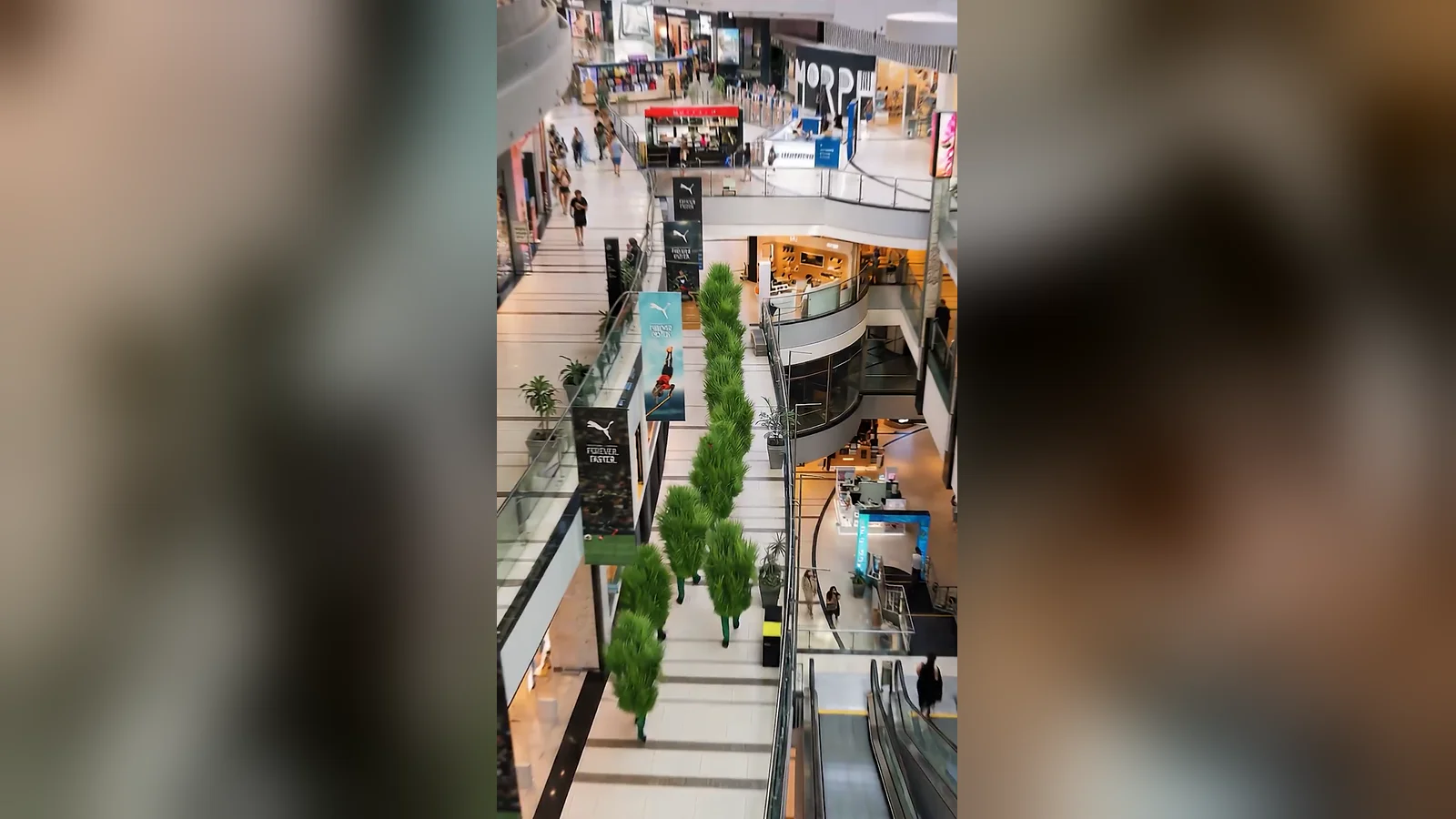
A published example is Días de lluvia, for Alto Palermo, a campaign about something that happens in any city: when it rains, plans change and so do the places where people meet. The idea was several urban stories that start separately and end at the shopping center, with the rain as the narrative thread.
Filming it the traditional way called for multiple characters, exteriors, rain and locations, and the context called for speed. The piece combined AI video production, corporate material and real assets to resolve characters, exteriors and weather. The project went from brief to campaign launch in 12 days, and the content was ready before the next rainy day.
That timeframe is explained by the fact that the idea and its execution were thought out together: the shots that called for rain, exteriors and several characters were resolved without depending on a shoot.
Another example from the same client is the giant World Cup ball, a teaser in which a ball of monumental scale appears integrated into the cityscape. There, the scene that was impossible to film was the starting point of the idea, and how that scale is achieved is in AI visual effects for brands.
Where the quality of an AI commercial shows
Two commercials made with the same tools can look very different. The difference shows up in places the audience does not name, but perceives.
Direction. Characters that stay the same from shot to shot, lighting that makes sense, chosen framing. When a shot is generated, someone has to decide which of all the variants is the right one.
Sound. Music, sound design and voice carry a good part of a spot's emotion. A commercial with flawless images and generic sound feels incomplete.
Finishing. Color, typography, product integration and mastering for each medium. It is what separates a test from a piece a brand can put on air.
All three depend on the team more than on the tool. That is why, when choosing who to produce with, it is worth looking at finished spots and asking who directs. This kind of piece is part of the campaigns and commercials service.
Frequently asked questions
Can an AI commercial be aired on television?
Yes. An AI commercial is delivered like any spot: in the length, resolution and technical format each channel or medium requires. What decides whether it can go on air is that it meets those specifications and that the brand is clear about the rights to all the material used, including music, voices and third-party brands. The way the images are produced does not change those requirements.
Can you tell that a commercial was made with AI?
It depends on the direction and the finishing. When characters change between shots, the lighting makes no sense or the sound is generic, it shows. When there is a clear script, shots chosen with judgment and complete post-production, the audience sees a spot from the brand. The goal is for attention to stay on the story and the brand, not on the tool.
What does the brand need to bring to start an AI commercial?
A brief with the objective, the message and the places where the piece will be seen, plus the available brand material: logo, typefaces, brand guidelines, product photos and any real asset that has to appear exactly as it is. It also helps to know who approves and on what dates. With that, the idea and the script can be worked on; the rest is defined during the process.
Can an AI commercial be combined with filmed footage?
Yes, and it is the most common approach. The real product, a store's facade or people who have to be those specific people are usually filmed or taken from the brand's archive, and what cannot be filmed is generated. In Días de lluvia, for Alto Palermo, AI production, corporate material and real assets were combined. Post-production brings everything together into a single piece.
Before writing the brief for your commercial, look at finished spots in the social media projects.