Video for shopping centers: a shopping center's content
A shopping center needs video all year round: seasonal campaigns, retail dates, store openings, events, promotions and pieces for its own screens. What organizes that volume is one idea per season that is adapted to each channel, instead of an isolated piece for each request.
This is useful for shopping center marketing teams and for the agencies that work with them. The general retail context is in the article on content as the bottleneck in retail and shopping centers.
Why a shopping center produces video all year
A shopping center has a calendar that never stops. Seasons, national consumer dates, its own dates such as anniversaries or shopping nights, brand openings, events and screenings. Each one calls for content for social media, for its own screens and sometimes for outdoor.
On top of that, the shopping center communicates two things at once. It speaks as a brand in its own right, with an identity that has to be recognizable in everything it publishes, and it works as a showcase for the brands it has inside. Both live in the same pieces. How that identity is built campaign after campaign is in a shopping center's brand in its campaigns.
The full year, date by date, is in the 2027 retail calendar for shopping centers.
The types of piece a shopping center asks for most
Looking at the published projects for shopping centers, the pieces fall into a few families.
Seasonal campaigns. Spring, summer, winter, Christmas. Pieces that have to last weeks or months.
Retail dates. Father's Day, Children's Day, Mother's Day, shopping nights. A short window and a lot of competition.
Store openings. A brand's arrival told from the shopping center's side. Details in the opening campaign for a store in the shopping center.
Events and real time. Screenings, shows, on-site activations and content that depends on something that is happening.
Promotions and benefits. Tactical pieces with conditions, prizes and dates.
Pieces for the center's own screens. Content for the shopping center's LED screens.
Corporate pieces. The shopping center's history, a renovation, an anniversary. Details in corporate video with AI.
Each family has its own production pace, and that is why it is worth planning them together.
One idea per season, adapted to each output
The temptation is to handle each request as a standalone piece. The result is a year of content in which nothing looks alike. A core idea per season or per date works better, carrying all the outputs: the main video, the versions for social media, the piece for screens and the print pieces.
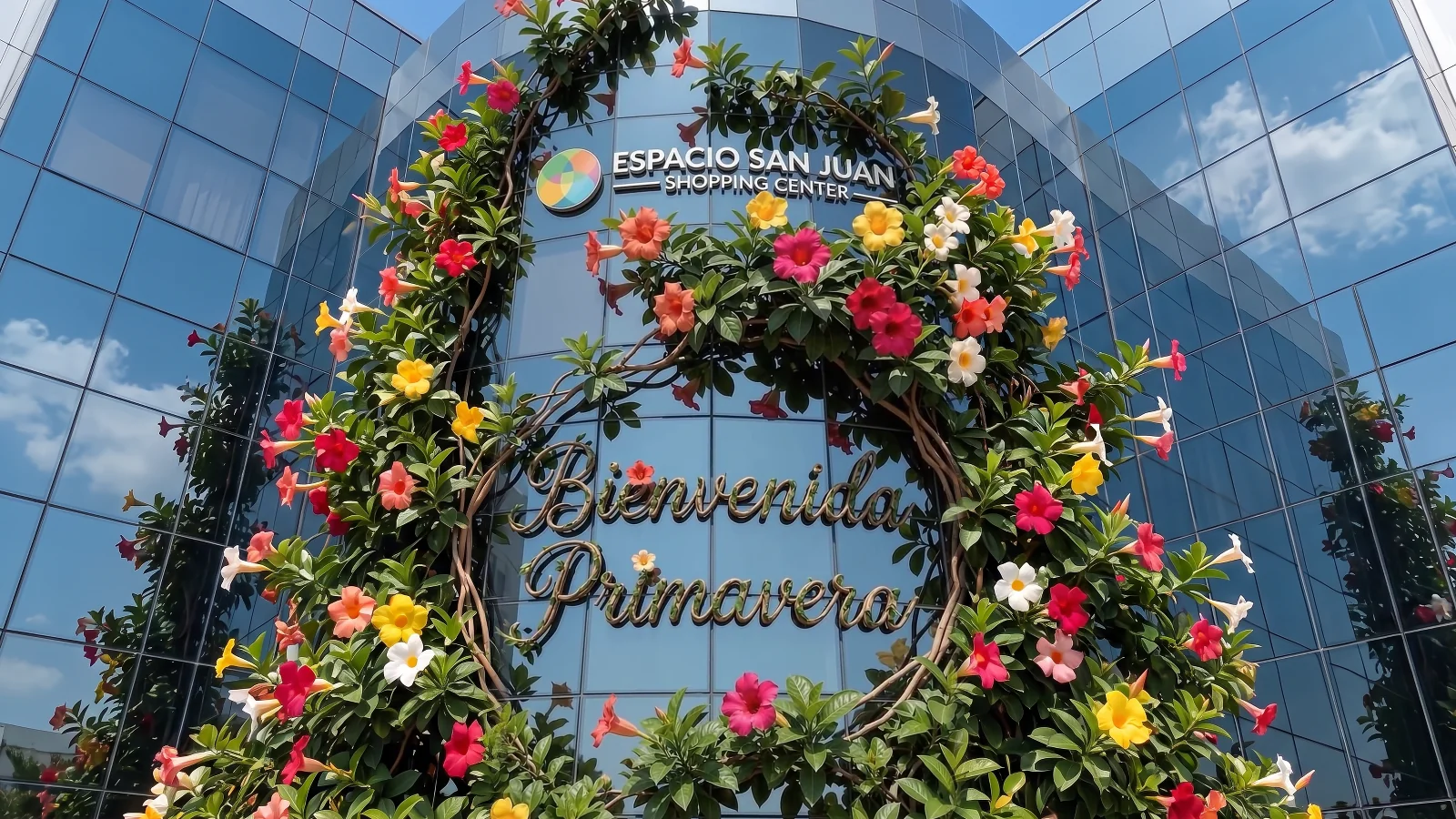
In Spring at Espacio San Juan, the request was a piece that would not expire in a week, with no promotions, no prices, no store brands and no people on screen. The idea was that the shopping center blossoms, with no offer and no cast, and the result was a piece with a useful life of months that also left high-resolution frames to publish.
In Noche Shopping at DOT, the idea was to portray the night as a marathon: visitors who get ready, go through the shopping center and pile up bags while the pace builds. The piece entertains first and organizes the promotional information afterwards. The same date had more than one execution, described in the three executions of Noche Shopping at DOT. December is thought out the same way, as shown in how to plan Christmas content at the shopping center.
The shopping center's screens are designed separately
Many shopping centers have LED screens in halls, on columns and on facades. They are an owned medium, with an audience that is already on site, and they call for pieces designed for that format: a different proportion, reading at a distance and, in general, no sound. A social media piece stretched onto a multi-story vertical screen gets lost.
That is why, in a well-planned season, the piece for screens is thought out from the start as one more output of the idea, with its own design. Everything to take into account is in the guide to content for LED screens.
Tactical pieces need an idea too
Promotions, benefits and participation conditions are usually handled with a text card. They work, but they look like all the others. A tactical piece with a minimal idea reads better and is remembered more.
In Playmobil Benefits at DOT, the activation combined a minimum purchase amount, uploading the receipt to ¡appa!, prizes from different brands and a Playmobil of the national team. The piece turned those conditions into an animation where the characters work as a visual anchor and the information appears in layers. The communication kept its promotional clarity and gained attention.
The same goes for on-site events: an invitation also has to tell something. More in how to promote an event at the shopping center. And when the opportunity appears without warning, as in a World Cup, the content is produced on the fly, as in the real-time World Cup for DOT.
How a year of content is organized
A year of content rests on three things worth deciding at the start:
The calendar. The year's dates are marked and it is decided which ones get their own idea and which are handled with simpler pieces.
The identity. The same team sustains the shopping center's style across very different pieces, from a seasonal campaign to an opening hours card.
The reaction. Spare capacity is kept for what was not in the plan: rain, a match, an opening that moves forward.
An example of that margin is Alto Palermo's Días de lluvia, a campaign about what happens to plans when it rains that was ready before the next rainy day. For agencies working with shopping centers, the article on production for agencies explains how to add capacity, and the role of AI in all this is in AI video production.
Frequently asked questions
What kind of videos does a shopping center need?
A shopping center needs seasonal campaigns, pieces for retail dates such as Father's Day or Children's Day, store opening announcements, content for events, promotion and benefit pieces, and videos for its own LED screens. On top of that come corporate pieces for anniversaries or renovations. Each family has its pace, and it is worth planning them together in an annual calendar.
How far in advance should a season be planned?
Ideally, the season's idea is approved before the first piece is produced, with the calendar of dates already marked. That way each output, from social media to screens, is designed from the start. The specific lead time depends on the number of pieces and approvals, and it is worth leaving spare capacity for whatever comes up during the season.
Can the same piece be used on social media and on the shopping center's screens?
The same idea can be used, but the piece for screens is almost always redesigned. A shopping center's LED screens have very vertical or very horizontal proportions, and they are seen from afar, without sound and for a few seconds. That is why the screen version is thought of as one more output of the campaign, with its own design, and not as a crop of the social media video.
How is the shopping center's identity kept across such different pieces?
With a core idea per season and visual rules that repeat: typography, color, tone and characters when there are any. It helps for the same team to produce all the outputs, from the main campaign to the opening hours card. That way a tactical benefits piece and a seasonal video are recognized as part of the same brand.
Everything published for shopping centers is gathered in projects for shopping centers.


